Walk into any mechanical room beneath a hospital or a high-rise and you can feel the difference before you see it. Pumps hum in a steady rhythm, valves the size of coffee tables hold back thousands of gallons, and the piping network looks more like a vascular system than a simple set of drains. This is where commercial plumbing lives, and it explains why the tools that thrive here diverge sharply from what most homeowners and even small contractors keep in their vans. The gap is not about prestige or price, it is rooted in physics, code, duty cycle, and the cost of failure.
I’ve spent years with my hands on both sets of gear, from Saturday morning fixes with residential plumbing tools to night-shift shutdowns in factories where a delay could cost tens of thousands per hour. What consistently stands out is how commercial plumbing tools earn their keep under pressure, literally and figuratively, and why trying to bridge the gap with the wrong gear invites delays, rework, and safety risks.
The environment dictates the tool
Residential plumbing is about comfort and convenience. The water service typically sits at 50 to 80 psi, fixture counts are modest, and most piping runs are short. You are welding copper or crimping PEX in tight chases, sweating a few joints, clearing hair and soap scum from a trap, or swapping a 40 to 75-gallon water heater. Residential plumbing tools are built around portability, ease of use, and affordability. They do these jobs well.
Commercial systems raise the stakes. Water pressures can run from 80 to 150 psi, and in high-rise buildings the vertical lift can push booster pumps to deliver 200 psi or more in certain tiers. Fire suppression systems operate under NFPA standards and need documented hydrostatic tests at 200 psi or 50 psi above working pressure, whichever is higher. Healthcare, food service, and industrial occupancies add their own standards for cleanliness, redundancy, and monitoring. Pipe size scales up quickly, from 2 inches to 12 inches and beyond, and materials diversify: carbon steel, stainless, cast iron no-hub, copper, CPVC, HDPE, and specialized linings. Every variable multiplies the demands on the tool set.
Put simply, the wrong wrench, press tool, or camera in this setting is not just inconvenient. It is a liability.
Pressing, welding, and threading at scale
One of the cleanest dividing lines is how joints are made. In homes, soldered copper and PEX crimp or expansion fittings dominate. Manual cutters, torches, and compact crimpers cover most needs. On commercial sites, you still see sweat and PEX, but the real productivity comes from hydraulic and battery press systems that handle large diameters at speed. The difference is more than size.
A press tool made for commercial work delivers higher tonnage, deeper throat depth, and rated duty cycles measured in thousands of cycles per charge. It accommodates families of jaws and rings for copper, stainless, carbon steel, and even groove adapters. The tool clocks a precise press time, force, and crimp profile, often with onboard logging. That data matters when a fire marshal or owner’s representative asks for proof that every joint on a 16-line manifold was made to spec. A light residential unit can snap a 3/4-inch PEX ring all day, but it struggles and overheats when you jump to 4-inch copper or 2-inch Schedule 40 steel fittings with press sleeves. I have watched a crew burn three hours babying an undersized press tool through big-diameter fittings. On a hotel riser shutdown with 150 rooms offline, that pain is memorable.
Threading tells a similar story. Handheld die heads and small tripod threaders are fine for a basement gas line. Move into 4-inch steel for a mechanical plant or a grease line in a commercial kitchen, and you need a high-torque power threader with rigid stands, oilers, and dies that hold tolerance after dozens of cuts. The metric that counts is not just speed, it is thread quality and consistency under repetitive use. Poor threads cause leaks under thermal cycling and vibration, and oils contaminated with metal chips shorten die life. Residential threading gear is not designed to keep tolerances after extended runs or to maintain cooling and lubrication at the required flow. Commercial threaders are built with gear reduction, robust clamping, and reliable oil pumps for a reason.
Welding is another leap. In a house, plumbing welding is rare outside of steel gas lines. In commercial work, certified welders and orbital welding rigs join stainless tube for medical gas or high-purity water systems. Orbital weld heads, power supplies with programmable schedules, and purge equipment are specialized tools, and they exist because a pinhole in a medical gas line is not an annoyance, it is a hazard. These systems demand calibration, traceability, and operator training. Residential plumbing tools simply do not live in that world.
Diagnostics that see through walls and bends
You can clear a residential clog with a small drum auger and a portable camera that sends a basic video feed to your phone. In commercial settings, that camera may travel 200 feet through 6-inch cast iron mains, negotiate multiple wyes, and document a defect well enough for a facilities manager to sign off during warranty. Image quality, head articulation, and distance measurement become critical.
Commercial inspection systems bring self-leveling heads, full 360-degree pan and tilt, laser dimeters for ovality and diameter estimation, and recording with overlay data like date, footage, and operator ID. Push rods are heavier with reinforced sheathing, and reels include powered retrieval to save the operator’s back. When you are navigating a line under a slab that supports a grocery store, an inaccurate distance reading can lead to mislocated demo that takes out a freezer line. I have seen crews pay for concrete scanning twice because a cheap meter lied by ten feet.
Leak detection follows a similar curve. Residential plumbers rely on a trained ear, simple pressure tests, and basic acoustic sensors. Commercial leaks hide inside long runs, behind fire-rated assemblies, or under exterior slabs. Acoustic correlators, high-resolution thermal cameras, tracer gas kits with hydrogen-nitrogen mixes, and data loggers are standard on serious jobs. These tools do not just find leaks, they provide a defensible record for insurers and inspectors. The upfront investment makes sense when a single undetected leak can spawn mold abatement contingencies that balloon into six figures.
Pressure testing without guesswork
Most homeowners never witness a pressure test beyond watching a gauge on a water heater. Commercial system testing is more formal and frequent. Domestic water, hydronic, fire suppression, medical gas, and even drainage systems undergo hydrostatic or pneumatic tests at specified pressures for specific durations. The tool kit reflects those requirements.
High-volume test pumps with precise pressure relief, calibrated gauges with certification stickers, and digital recorders that log pressure over time meet code and documentation needs. Some pumps have infinitely variable speed controls to avoid over-pressurizing brittle materials during initial fills. I watched a junior tech crack a run of CPVC by spiking pressure with a handheld pump during a chilled water tie-in. The repair cost dwarfed the price of a proper test cart with a soft-start pump and relief valve.
Residential-grade gauges often lack accuracy and repeatable calibration. In a commercial setting, a 2 psi drift can fail an inspection or mask a slow leak that reappears after ceilings close. Good teams maintain a rotation of calibrated instruments, and the tools are built to accept quick changes without damaging stems or seals.
Power and ergonomics at scale
Power is not a luxury on a site with hundreds of terminations and tight shutdown windows. Battery platforms for commercial plumbing tools push higher voltage and larger amp-hour packs, but the real value lies in sustained torque, thermal management, and tool management. Press tools, expansion tools, band saws, and hammer drills may run in continuous duty for hours. Overheating leads to delays that compound when a crew is stacked on other trades waiting to turn over a floor.
Ergonomics matter too. A residential plumber can accept a heavier tool for a short use, but repetition at scale magnifies fatigue injuries. Balanced press tools with rotating heads, shoulder slings for drum machines, wheeled bases for larger cutters, and stands with quick-leveling feet keep productivity up and injuries down. In a hospital retrofit, we once completed four floors of fixture rough-ins ahead of schedule because our press tools were rigged with extended handles and swivel rings that cut setup time by seconds per joint. Multiply small gains by a thousand actions and you get an extra day of float.
Drain cleaning where blockage meets biology and grease
A kitchen sink clog in a house usually yields to a 25-foot cable or a compact drum machine. Now picture a restaurant with a 4-inch grease line serving multiple tenant spaces and a main that catches lint from a hotel laundry. The blockage is heavier, stickier, and more entrenched. Commercial-grade sectional machines with 7/8-inch cable and cutters that chew through hardened grease caps and rag balls are not optional. High-flow, hot-water capable jetters with 3,000 to 4,000 psi pumps and multiple nozzle sets make the difference between recurring callbacks and a line that stays open.
Operators who work with jetters learn to read the pitch and sound of returns, to choose warthog or spinner nozzles based on branch tie-ins, and to avoid forcing water into unvented traps that can blow back into occupied spaces. The jetter itself needs a reliable bypass, thermal protection, and hose reels that hold up to repeated abrasion. Residential gear is not built for that cycle count or heat. When a line runs 200 feet underneath a commercial bakery, you do not want to explain why a bargain hose burst mid-clean and flooded a proofing room.
Cutting, beveling, and grooving without shrapnel
Pipe preparation is another quiet differentiator. Home jobs accept small burrs and hand-deburred edges. In commercial projects, bevel angles and groove depths must meet the specs of grooved coupling manufacturers, or the joint will fail under pressure fluctuations. Roll groovers with proper depth stops, pipe stands that stabilize long stock, and beveling machines that deliver consistent angles save hours and avoid rework. Grooving a 10-inch line with a handheld setup invites uneven depth, which stresses gasket seals. A proper groover paired with a torque wrench calibrated for housing bolts turns a risky step into a routine one.
Cold-cutting saws and split-frame clamshells matter for live systems. In hospitals and data centers, hot work is restricted, and downtime windows are tight. Cold-cut tools reduce sparks, control chips, and allow accurate prep without contamination. Residential plumbing tools rarely need to cut 8-inch stainless in place next to active equipment.
Safety and compliance as design inputs
Commercial work often flows through a web of codes and standards, not just local plumbing codes but NFPA, ASME, UPC or IPC variations, plus owner standards. Tools are part of compliance. Insulated handles for proximity to live equipment, spark-resistant wrenches where flammable gases may be present, and intrinsically safe inspection lights in hazardous zones keep crews out of trouble.
Documentation is the quiet partner here. Some press and test tools generate logs that upload to asset management systems. That traceability is not a gimmick. On a stadium job, we had to provide evidence that every joint in a 3,000-foot stainless loop was pressed within manufacturer parameters. The record pack shaved days off the closeout process and prevented costly re-inspections after a single small leak raised questions.
Residential plumbing tools rarely integrate with digital logs or require calibration certificates, because the risk profile is lower and inspectors do not typically ask for them. A plumber who migrates from residential to commercial often finds the paperwork load as heavy as the tool bag. Tools that streamline it are not luxuries, they are force multipliers.
Cost, value, and the true price of downtime
The sticker shock is real. A commercial-grade press tool with large-diameter capacity can cost several times what a residential unit costs. Threaders, jetters, orbital welders, and inspection crawlers can run into the tens of thousands. Owners and small shops sometimes see the line item and flinch. The calculation shifts when you measure cost against downtime, rework, and liability.
Consider a retail complex where a 6-inch main clogs on a Saturday. A residential drum machine might punch a hole in the blockage, buy a day, and leave the line vulnerable. A jetter with the right nozzle set can scour and flush the entire run, restore full diameter, and reduce emergency calls for months. The first option looks cheaper until the third callback or the flood that soaks a tenant’s inventory.
The same logic applies to press systems and threaders. A crew armed with commercial plumbing tools can finish a large rough-in two to four days faster on a mid-size build, based on typical production rates for 2 to 4-inch pipe with hundreds of fittings. On jobs where labor costs dwarf material, the faster schedule covers the tool premium, then adds margin. On smaller fit-outs, renting high-end gear for critical phases makes sense. Tool rental at commercial rates, used intelligently, beats pushing residential tools past their limits and absorbing overtime when they fail.

Where residential tools still shine
None of this means a commercial plumber should abandon residential plumbing tools. There are tasks where they are perfect. Compact cutters, hand reamers, basin wrenches, small O-ring picks, and portable torches are nimble in tight spaces above ceilings and behind millwork. A lightweight battery band saw is easier to carry up ladders than a heavier steel saw. On service calls that mirror residential conditions, hauling a full-scale drum machine or giant press set is overkill.
The trick is to understand which line you are crossing. If the pipe diameter, pressure, material, or code documentation requirement steps beyond residential norms, the safer bet is to reach for purpose-built gear. A plumber who knows when to switch tools earns both speed and credibility.
The human factor: training and judgment
Tools alone do not deliver results. Commercial plumbing tools concentrate power and capability, which raises the training bar. Press profiles must match the fitting system. Thread depth and die selection affect sealing. Jetters can cut through old PVC if you choose the wrong nozzle and dwell too long. A thermal camera that is not tuned for the right emissivity will lie to you about a hidden leak.
Good crews invest in manufacturer training, hands-on practice, and post-mortems after tough jobs. I have seen a new hire transform from tentative to reliable in three months just by shadowing an experienced plumber who explained not just the “how” but the “why” on every tool choice. When a tech can tell you the difference between a groove that looks right and one that will bite a gasket under surge, you can trust them with a shutdown.
Commercial jobs also throw curveballs. Old buildings conceal abandoned lines, mixed metals corrode at joints, and drawings may be aspirational. The ability to switch from press to weld, from snake to jetter, or from acoustic to tracer gas based on the situation separates pros from pretenders. Residential plumbing tools have fewer modes and simpler decision trees. Commercial work rewards adaptability, and the tool kit needs depth to match.
Material realities: steel, cast iron, and corrosion
Material choice is driven by code, cost, and function. Cast iron no-hub dominates large drains for its sound attenuation and fire performance. Joining it reliably calls for torque-limiting wrenches that hit 60 inch-pounds precisely on clamp bands. Too little torque leaks, too much crushes gaskets or distorts the hub. I have walked behind crews tightening by feel and found a third of clamps off-spec. A small investment in torque tools and the habit of using them saved later headaches.
Steel demands nuanced prep. Black steel for fire sprinklers or gas lines arrives with lacquer that contaminates threads and welds. Commercial threaders and bevellers with integrated cleaning stages, or crews trained to strip coatings before threading, prevent long-term leak paths. Stainless punishes sloppy work through galling and heat tint. Orbital welding setups with purge dams, oxygen sensors that verify a low O2 environment, and wire brushes dedicated to stainless keep systems clean and code-compliant. None of this lives in the typical residential toolkit.
Digital oversight and fleet management
On large sites, tool loss and downtime cripple schedules. Commercial plumbing tools now ship with RFID or Bluetooth tags, battery platforms share fleet analytics, and some brands integrate pressing logs, inspection video management, and maintenance reminders into a single ecosystem. A foreman can check if the 6-inch jaws are on level 12, confirm that the test cart passed calibration last month, and lock a tool that walked onto a different project.
Residential plumbing projects rarely justify this overhead. For a company that straddles both markets, adopting at least a lightweight asset management approach for the big-ticket gear pays off. It reduces the Friday scramble and the Monday excuses.
The budget ladder for growing shops
For plumbers moving from residential service into light commercial work, the transition need not happen overnight. Build capacity in stages. Start with a mid-range press tool that handles to 2 inches across copper and stainless, then add large-diameter rings as projects warrant. Upgrade drain cleaning with a sectional machine and a basic jetter before chasing inspection crawlers. Rent specialty gear until recurring demand justifies purchase. The key is to recognize earlier when residential plumbing tools are costing more than they save.
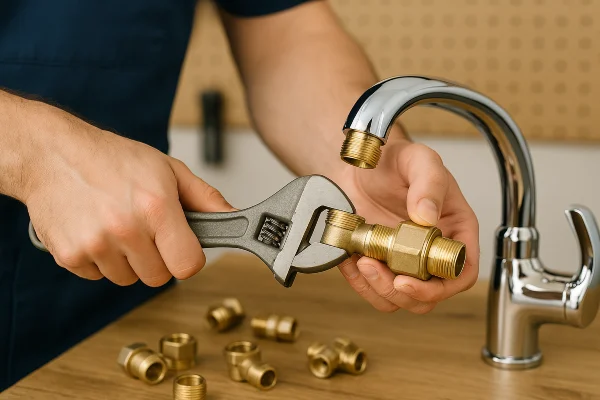
Even within the same tool category, quality tiers exist. Not every job needs top-shelf everything. A balanced approach emerges with experience. For example, buy the best threader you can afford, since poor threads ruin days, but rent an orbital welder until medical gas work becomes steady. Invest in calibrated gauges if you ever touch fire lines, because failing a test in front of an inspector burns reputations.
A brief comparison when stakes are high
- Pressure and diameter capability: Commercial plumbing tools handle higher pressures and larger diameters reliably, with documented performance. Residential plumbing tools focus on smaller lines at lower pressures. Duty cycle and reliability: Commercial-grade motors, pumps, and drives are built for continuous operation. Residential tools prioritize lightness and occasional use. Documentation and compliance: Commercial tools often log data and accept calibration, enabling code compliance. Residential gear rarely offers traceability features. Safety integration: Commercial environments demand tools with safety design for hazardous or restricted areas. Residential spaces usually do not. Total cost of ownership: Commercial tools cost more upfront but pay back through speed, reduced rework, and lower downtime on larger Plumbing projects.
Why this matters to owners and facility teams
It is tempting to push a handyman approach onto commercial plumbing because the tasks can look familiar. Water in, water out, a few valves in between. The difference shows up in how systems age. Undersized or imprecise tools leave microscopic channels in seals, threads that weep under thermal cycling, and debris that abrades pumps. Years later, chronic issues appear, and they are hard to trace back to a rushed rough-in or a barely adequate press. Owners pay twice: once for the small savings during install and again for long-term maintenance.
Facility teams who specify gear indirectly through their contractor choices can tilt outcomes. Ask whether the plumber carries calibrated gauges for https://rentry.co/qk37fzcf hydro tests, whether their press tools can log cycles, and how they handle large-diameter drain cleaning. Listen for specific brands and models, but more importantly for the reasoning behind their choices. A plumber who can explain why a particular nozzle set matters for your grease line, or why a torque wrench is non-negotiable on no-hub, is a plumber who will protect your building.
The bottom line for working plumbers
Commercial plumbing rewards preparation and the right kit. Residential plumbing tools have a place, especially in service and finish work, but they hit limits quickly in large systems. The pressure, documentation, and scale of commercial jobs justify heavier, smarter, and more specialized tools. The payoff comes in predictable schedules, fewer surprise leaks, cleaner inspections, and a reputation that wins the next contract.
I keep a simple rule of thumb: if the job involves pipe over 2 inches, pressures near or above 100 psi, special materials like stainless or CPVC for fire lines, or any system that an inspector will test and verify with paperwork, reach for commercial plumbing tools by default. It is not only about finishing faster. It is about delivering work that endures under real loads while the building lives above it.
THE LEANDER PLUMBER - COMPANY 1789 S Bagdad Rd #103, Leander, TX 78641 (737) 530-8021